A 2019-1-HU01-KA104-060556 számú "Eredményesebben a felnőttek alapkompetencia fejlesztéséért Békés megyében" című Erasmus+ projektünk keretében 2020. február 10 és 13. között látta vendégül az ETKA ANDRAS (Észt Felnőttoktatók Egyesülete) a GFF Békési Szakképző Iskola 5 fős küldöttségét. Észtországban nagyon nagy hangsúlyt kap a felnőttképzés, a felnőttoktatás, különösen az élet hosszig tartó tanulásra (LLL) fókuszálnak. Erre nagyon komoly marketing stratégiát épített fel az ETKA Andras szervezet, amely több, mint 60 taggal rendelkezik, valamint magánszemélyek is segítik tevékenységüket. Több év alatt a reklámtevékenységükkel elérték azt, hogy a társadalom széles köre ismeri a felnőttoktatásban, felnőtt tanulásban rejlő lehetőségeket. Minden típusú felnőttkori tanulási problémára, kihívásokra megtalálták az intézményi kereteket. Alapkompetencia fejlesztéstől kezdve, átképzési lehetőségeken át az életminőséget javító kurzusokig. Sok jól szervezett, hatékony akcióval tartják fenn a köztudatban a tanulási, elhelyezkedési problémák megoldásának lehetőségét, de lehetőséget kínálnak a magasan képzett értelmiség továbbfejlesztésére is.
Experiences of the study tour in Estonia
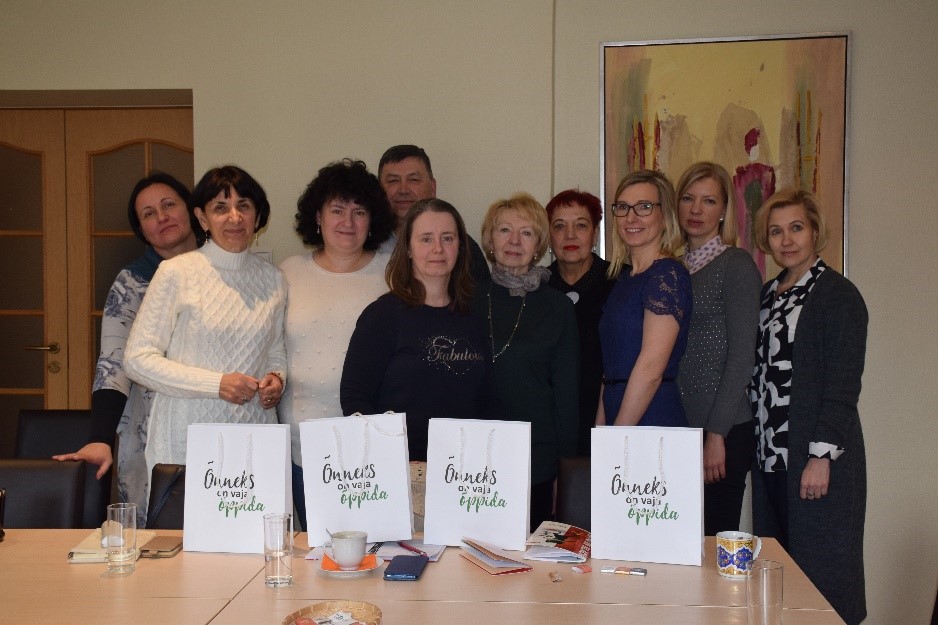
From 10th to 13th February 2020, the Estonian Association of Adult Educators (ETKA ANDRAS) hosted a 5-member delegation from the GFF Békés Vocational School. Estonia puts a strong emphasis on adult education, in particular focusing on lifelong learning (LLL). The „ETKA ANDRAS” has built up a comprehensive marketing strategy. They have more than 60 members and also individuals who participate in their activity. Over the years, through their advertising activities, they have achieved that wide spectrum of the Estonian society has become aware of the opportunities available in adult education and adult learning. The most appropriate institutional frameworks have been found for all types of adult learning problems and challenge from basic skills development, including courses improving quality of life. Numerous well-organized, effective actions have been and being taken to maintain the possibility of solving learning and employment problems in the public awareness, but they also offer opportunities for the further development of highly qualified intellectuals.
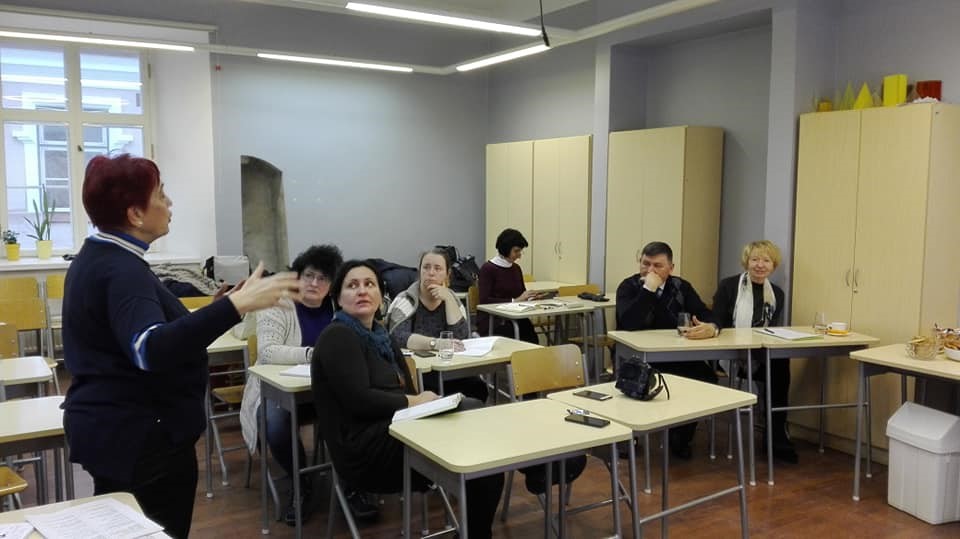
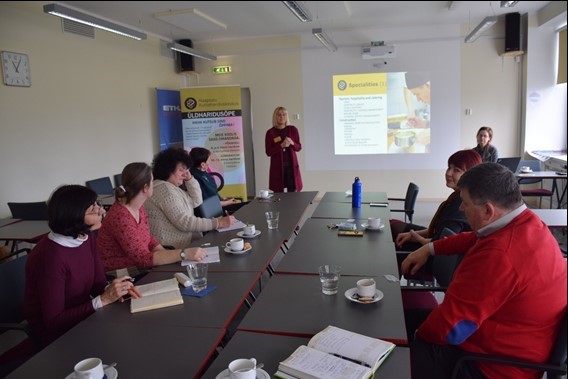
During our four days in Tallinn, we visited four different institutions to learn their good practices. In the Tallinn’s Old Town School for Adults (Tallinna Vanalinna Täiskasvanute Gümnaasium) we learned that teachers mentor people with learning difficulties, as well as other learners, in the capacity of „learning ambassadors” support their work. If necessary, a family therapist or psychologist is involved also to help. They support the learning of students-parents with little children providing a babysitting service.
To make learning even more effective, a 1-2 weeks leveling course before enrollment is also organized to assess the level of the knowledge and capabilities of the future learners.There is also a possibility to assess the basic skills and develop them if necessary.
The majority of the learners attend the classes in person, but it is also possible to master the content of the curriculum in e-learning. A strong emphasis is being put on language teaching and the development of digital competencies also.
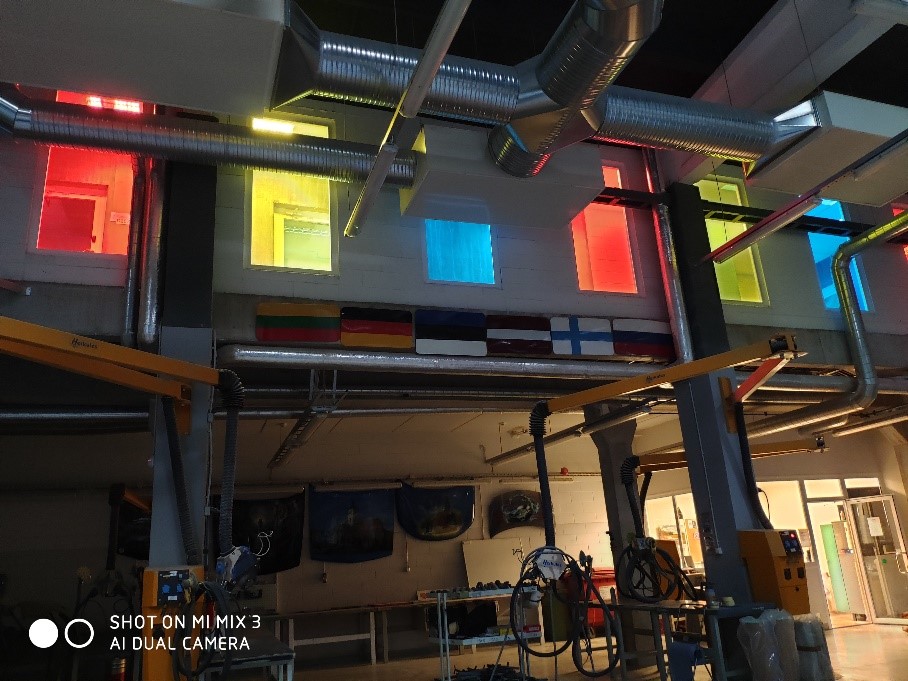
The Tallinn Lasnamäe School of Mechanics (Tallinna Lasnamäe Mehaanikakool) is probably the best equipped vocational school in the country, where in addition to full-time training, there is also adult education.
The participants of the adult courses are integrated into the classes of the pupil, so they learn together. In order to avoid dropping out, learners may get career counseling, pedagogical assistance, mentoring and part-time training.
It is also possible to learn just the theory if someone e.g. if one has been working under a supervision of a qualified senior.
Modern training workshops and highly qualified professionals enables high-level professional education. Vocational theoretical and practical education coexist closely to help to deepen the acquisition of basic skills as well as to strengthen the so called soft competencies. The education is project-based, so learners can put what they have learned into practice immediately after acquiring theoretical knowledge. This is the purpose of that the room for theoretical education is located next to or above the workshops. Participants in automotive training practice on the cars of the school, students and the teachers. Environment protection is also a priority, so the school only partly uses rainwater to wash their cars, and the lights also operate on a motion sensor. Partner companies and firms are also involved in curriculum development. Toyota has set up a workshop where they train their own people, but the school can also use their state-of-the-art equipment.
The Haapsalu Vocational Education Center (Haapsalu Kutsehariduskeskus) it is located on the outskirts of the city of Haapsalu (appr. 100 kms from Tallinn), in a large area. Even the location of the recently renovated and enlarged real estates of the school also shows that a well-thought-out education policy governs the Estonian education system. Well-designed spaces, friendly solutions, comfortable school furniture and perfectly tailored rooms are provided for the learners and pupils. In addition to classic full-time training, there is a strong emphasis put on teaching adults with the focus on work-based learning, so the basic skills are developed through the professions.
They offer longer and shorter courses in four professional trades: tourism and catering , construction, wood industry and business. They teach their 750 students/pupils in 30 jobs in the fields of information technology, wood industry, catering, construction, crafts, design, public administration and social sectors. 30 different curricula are taught but these can be changed on demand. There are differences within the trades depending on to whom is the training taught. For example, a hospital service is only for young people, and the cook assistant is only for people with special needs. Both young people and adults can participate in post-maturity training as an accountant, host or catering manager. Only adults can apply for the guide, tour guide, furniture restoration, babysitter and social care trainings. Most of the trainings are free, but there are also ones to be paid for.
Prior to the application for the trainings, the knowledge is assessed in August, at which time the discussion, test and trial exercise reveals whether there is a basic deficiency and in which area, what should be filled at the beginning of the training.
There are also preparatory courses in which the interested individuals can try several professions and trades, and basic basic skills could be also developed there. This is a new initiative for those who are not appropriately skilled and „don’t know what they want”. Such a course can last from 6 months to 1 year.
Each training concludes with an exam. The school issues a certificate (similar to the certificate in Hungary) in recognition of the acquired knowledge, even when completing module 1-1.This is also important because as if participants in the training study completes studies elsewhere in the same direction, those modules are taken into consideration.
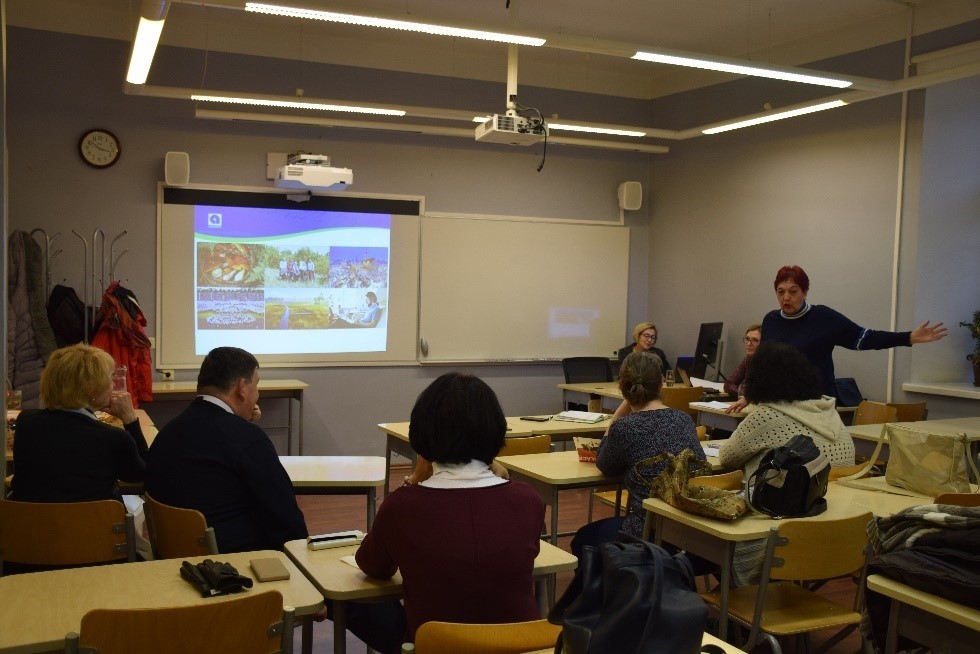
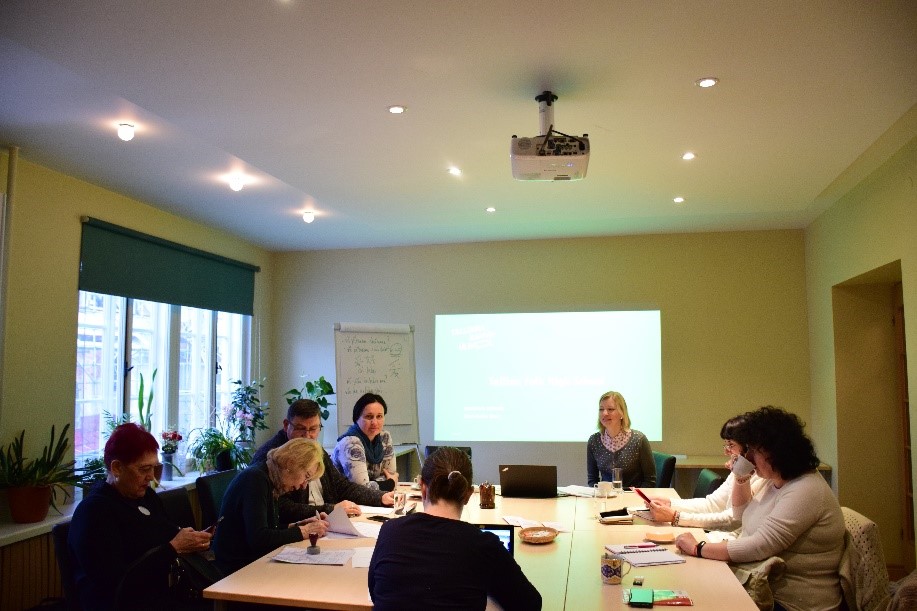
There is also a strong emphasis on teachers’ training to provide modern, high quality education and development for their students. External lecturers are required to have pedagogical qualification, so they take part in courses and trainings. There are also common trainings and trainings to fulfil individual needs. Vocational trainers and teachers spend two weeks at companies to get to know state-of-the-art technology. We attended a training course where teachers ’digital competencies were developed. In the well-equipped classroom, participants were able to learn the applications to be used in their lessons. The participants also have a say in shaping the content of the training, so their needs are taken into account. The school not „only” teaches, but also provides services: event organization, catering, accommodation, conference room and meeting room rental, woodworking on their palette etc.
The Tallinn School of Lifelong Learning/Tallinn Folk School (Tallinna Rahvaülikool) is one of the largest „peoples’ school in Estonia.
Their goal is to provide their students with knowledge related to a better life. The school contributes to adult education with longer or shorter courses in non-formal education. According to their statistics, their main audience is the 30-60 age group, so people who are active on the labor market. Typically, learners are always motivated by personal reasons. Their courses and trainings have a very wide range. Most courses are related to culture (art, folk art, music), but general skills are also widely developed. The trainings last from September to May, all are free of charge, and conclude with a certificate issued by the school. Summer camps, intensive courses and lectures await those interested during the summer vacation period. Anyone can apply for the courses, there is no entrance test.
According to their experience, although almost everything can be learned online, adults are still looking for courses where there are communities, where people meet people. There is not a specific competency or skills development group, but these competencies and skills are developed in numerous many courses (communication, literacy, numeracy).
In the „functional literature” courses, e.g. how to write a short story, the participants learn about literature and also read examples.
„Discussion courses” are also organized where the goal is to learn oratory, a culture of reasoning. Mathematical competencies are hidden in knitting-crochet courses.
In the digital competencies/skills courses, those interested will learn, among other things, how to use the features of a smartphone or the safe use of social media, but their cyber security courses are also sought after.